
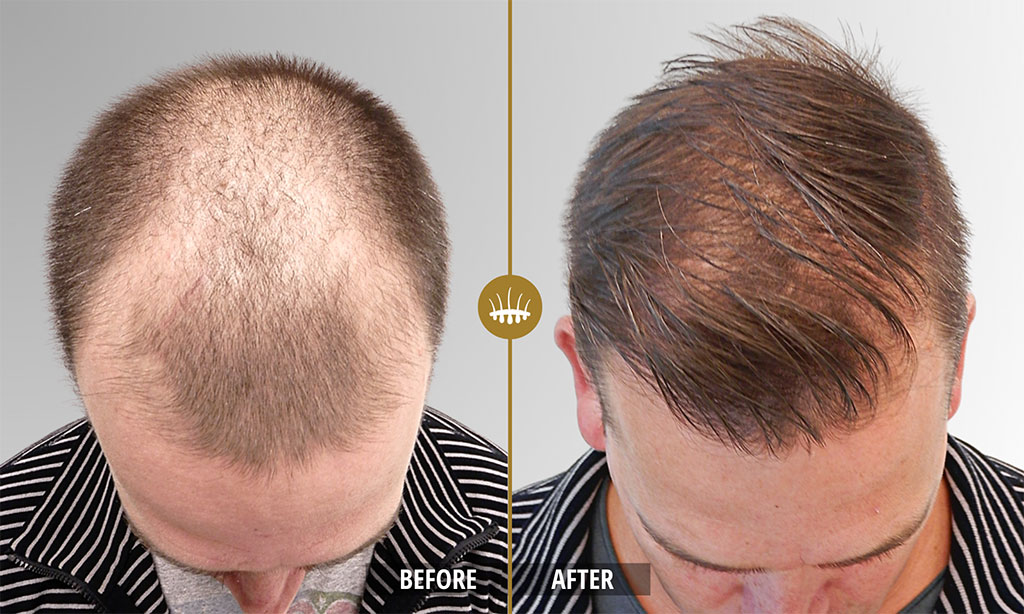
A medical and aesthetic issue, hair loss affects men and women equally today. In France, nearly 2 million women are affected by alopecia , a hair loss problem that is predominantly male. Many diseases affect our scalp today, and while they can be treated, their consequences are debilitating for those affected. Fortunately, a lasting and aesthetically pleasing solution has been developed to restore physical comfort: hair transplantation . But how does it work? And who can perform it?
What is a hair transplant?
The use of hair grafts is not new. Experimented with since 1880, this technique became popular in 1950 with Dr. Norman Orentreich, who introduced 4mm implants. The grafts are taken from the back of the head, from the occipital region, which is not affected by the influx of testosterone, the main cause of alopecia.
In 1991, this initial technique was refined by Dr. Uebel, who became the pioneer of modern hair transplantation . His minigraft and micrograft techniques made it possible to cover an entire bald area. A single transplant involves more than 1,000 grafts in a single session—a technical feat with immediate results that continues to evolve today.
How do hair implants work?
Now, only micrografts remain , far more aesthetically pleasing than minigrafts, whose grafts, being too large, were often unsightly and unnatural in their final result. The implants are always taken from the back of the head, in the occipital region, an ideal donor area for transplantation because it is unaffected by hair loss. The patient undergoes local anesthesia, allowing them to undergo the procedure without additional physical stress; the micrograft is implanted hair by hair. The two methods known and appreciated today are called FUT and FUE, which explain how a hair transplant works in the long term.
- How does the FUT technique work ?
Also known as the “strip method,” the FUT (or Follicular Unit Transplantation) method involves transplanting follicular units. The surgeon removes a strip of skin, which is then divided into different groups of follicular units to help extract the hair follicles. These follicles are then reimplanted in the balding areas.
- How does the FUE technique work ?
FUE (Follicular Unit Excision) is a much more recent technique that involves the individual extraction of follicular units. The follicles are removed with a circular punch. This punch, measuring less than one millimeter in diameter, allows for a narrower excision, unlike FUT, which involves an excision the size of a strip.
Conclusion
With proper post-operative care, whether for the area where the hair follicles were harvested at the back of the head or for the recipient area, the results are immediate. The final result, using the micrografting method, is much more natural than with older hair transplant techniques and is noticeable approximately 12 months after the procedure. Opting for this type of surgery therefore guarantees optimal results.